
Welcome to the heart of our home — our completed kitchen remodel in St. Charles, Illinois, set within a 1997 Colonial home. If you’re searching for kitchen renovation ideas that feel classic, warm, and designed for everyday living, you’re in the right place.
As a St. Charles interior designer also serving Geneva and the greater Chicago suburbs, I approach every kitchen remodel with one goal: creating spaces that feel cohesive, functional, and timeless — grounded in thoughtful, lasting design choices.
Homes built in the late 1990s throughout St. Charles and the greater Fox Valley Chicago suburbs often have wonderful bones. Generous layouts, established neighborhoods, and strong architecture are part of their appeal. But kitchens from that era were designed for a different way of living — closed-off rooms, undersized islands, soffits above cabinetry, and heavier finishes that don’t always translate today.
This kitchen remodel wasn’t about reinventing the home. It focused on refining the layout, proportions, and details to support how families live now, while honoring the original Colonial character.
Whether you’re planning a full kitchen remodel in St. Charles, updating a Geneva kitchen, or simply gathering inspiration for a Chicago suburban home, the design principles below are the same ones I return to again and again in client projects throughout the Fox Valley.
My hope is that this post offers both inspiration and clarity — and a better understanding of how timeless kitchen design decisions come together, one thoughtful choice at a time.
10 Timeless Kitchen Remodel Ideas
These ideas form the foundation of a kitchen remodel that feels classic, functional, and built to last.
1. Embrace Classic Cabinetry
When designing a classic kitchen, cabinetry truly sets the tone. It is the element that quietly does the most work, both visually and functionally, which is why thoughtful decisions here tend to have the greatest long-term impact.
In any kitchen remodel, I always encourage investing in the best cabinetry your budget allows. The difference is rarely just the door style. It lives in the details. Proportions, crown molding, panel depth, toe-kick treatment, and how the cabinetry meets the ceiling are what separate a builder-grade kitchen from one that feels layered and considered.
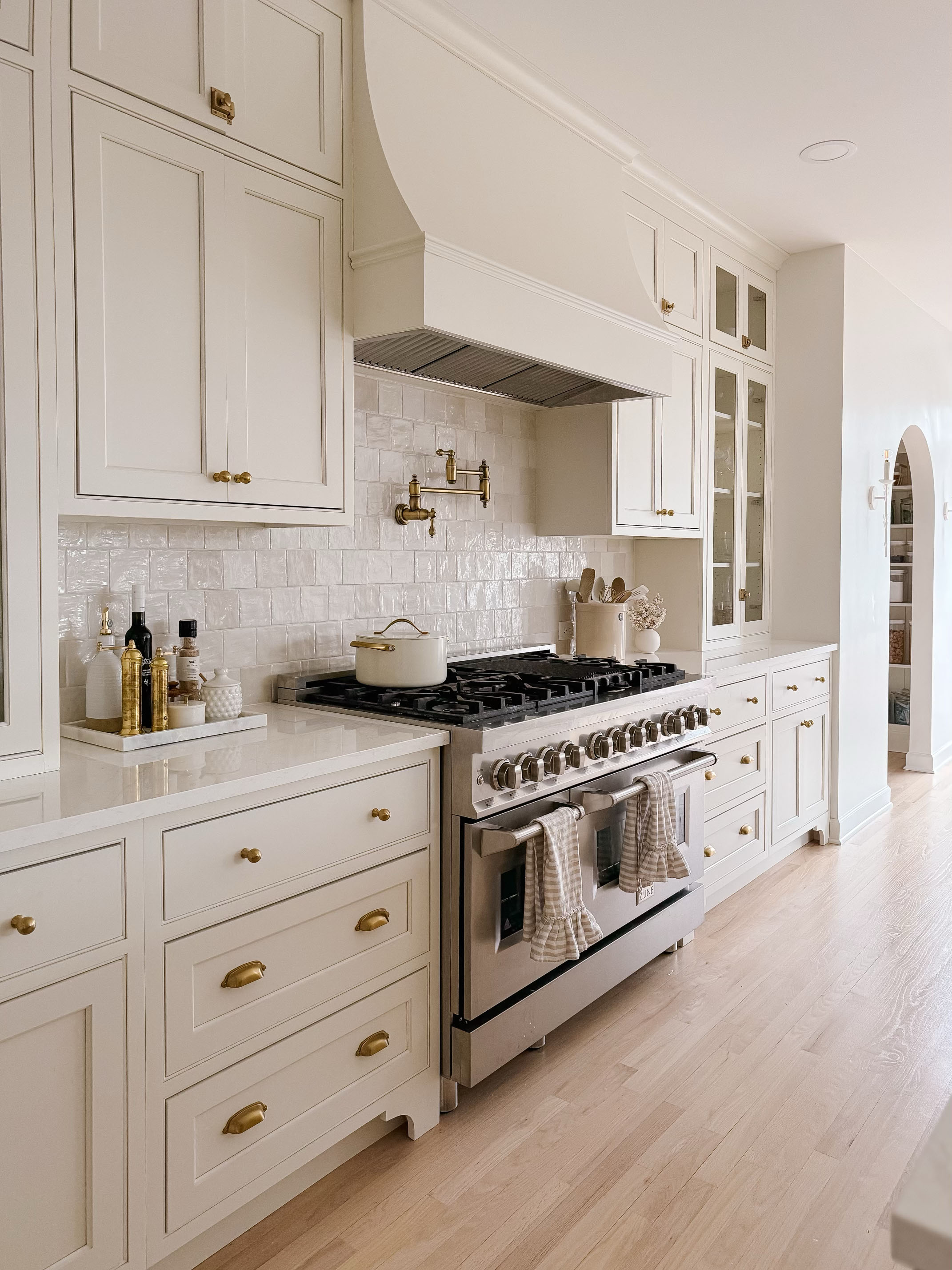
For this St. Charles Colonial, we chose inset shaker cabinetry as the most natural fit. Inset doors bring a furniture-like quality that works beautifully with traditional architecture. We paired them with subtle bead detailing and slab-top drawers to add character without tipping the space toward ornate.
Paint color matters just as much. Here, I chose Sherwin-Williams Greek Villa for the cabinets, one of my favorite warm whites. It is soft and creamy without reading yellow, and it performs beautifully in a north-facing room. Paired with Sherwin-Williams Pure White on the walls, the kitchen feels cohesive, calm, and comfortably timeless.
2. Create a Functional Layout with Flow in Mind
A timeless kitchen starts with a layout that supports how you actually live. The classic work triangle refers to the relationship between the sink, range, and refrigerator, and it still plays an important role in how a kitchen functions. Just as important, though, is how the space feels to move through and how it connects to the rooms around it.
In this St. Charles kitchen remodel, removing one wall was the decision that unlocked everything else. Opening the kitchen allowed light to flow more naturally through the space and strengthened its connection to the rest of the home. Repositioning the sink, centering the range, and relocating the refrigerator improved circulation and adjusted the work triangle. These changes allowed for the construction of a 10-foot island, which was a top priority for daily living.
The kitchen now feels open without feeling exposed. It’s connected, balanced, and designed to support the rhythms of everyday life for a growing family.
3. Add Character with Lighting
Lighting does far more than illuminate a kitchen. It shapes how the space feels throughout the day. Lighting is one place where it’s worth splurging. Thoughtful fixtures serve as the jewelry of the kitchen. They add personality, warmth, and a finished layer to the space.
I always approach lighting in layers, balancing function with warmth and character.
In this kitchen, oversized traditional brass lantern pendants anchor the space and provide a strong visual presence. Plaster sconces and a wicker flush mount introduce texture and softness, keeping the kitchen from feeling overly polished or formal. We selected each fixture to contribute to the overall mood, with dimmers allowing the atmosphere to shift easily from morning to evening.
When lighting is thoughtfully planned, the kitchen feels warm, welcoming, and comfortably lived in.
4. Go Timeless with Flooring
Flooring is one of the hardest-working elements in a kitchen, which makes timeless materials especially important. I’m always drawn to finishes that feel grounded and natural, honoring the grain and carrying a sense of heritage.
In this St. Charles Colonial, we chose to refinish the original red oak floors rather than replace them. It was both an economical and eco-conscious decision, especially considering that much of the first floor had usable flooring, along with an existing staircase that needed to remain consistent. We sanded the floors down to raw wood. Then we applied Bona Nordic with a Bona HD High Traffic finish. The result is a lighter, more neutral tone that closely mimics white oak while preserving the home’s original character.
Natural wood floors ground a kitchen and allow the surrounding details to shine. Here, the lighter finish brings a sense of airiness and quiet refinement, offering a refreshed look that still feels true to the home.
5. Incorporate Open Shelving or Glass Features
Open shelving and glass-front cabinetry are a thoughtful way to lighten a kitchen visually while still keeping it functional. When used intentionally, open shelving and glass-front cabinetry break up longer runs of cabinetry. They also create space to display treasured glassware, beautiful dishes, or a well-loved family cookbook.
This is often where the difference between cabinet design and interior design becomes clear. A cabinet designer’s role is centered on selling and specifying cabinetry, focusing on layouts and storage within a particular cabinet line. An interior designer looks beyond maximizing cabinets alone and considers the entire space, including proportion, light, and visual balance. Knowing when to pull back with open shelving or glass fronts allows the kitchen to feel lighter, more layered, and able to breathe.
As with most design details, restraint is key. A little goes a long way.
6. Incorporate Architectural Details
The most successful kitchen remodels begin by paying close attention to the home itself. Architectural details are what give a space depth and a sense of permanence.
In this St. Charles Colonial, we intentionally preserved the original dental molding in the adjoining rooms, allowing it to shine. Rather than competing with those details, we designed the kitchen to coordinate quietly, using classic proportions, restrained trim profiles, and tailored cabinetry that feel appropriate to the era of the home. Arched openings and subtle millwork cues help the kitchen relate naturally to the surrounding spaces.
The goal was continuity. Every element was considered so the kitchen feels as though it belongs, not just within the room, but as part of the larger home. These are the kinds of details you may not immediately notice, but they’re what make the space feel settled and cohesive from one room to the next.
7. Plan for Practical Kitchen Seating
A kitchen should naturally invite people to gather. Seating plays a big role in how the space functions day to day, from quick breakfasts and homework at the island to lingering conversations while cooking.
For this remodel, we chose to skip a traditional kitchen table and lean into a larger island instead. In our last home, we realized the island was where we truly ate and spent time, and with open sightlines to the dining room, a third eating area felt unnecessary. That decision allowed us to prioritize a more open pantry design. It also helped maintain better flow through the space. One guideline I always share is allowing about 24 inches per stool, which makes a meaningful difference in both comfort and circulation.
When seating is planned with intention, the kitchen naturally becomes the place everyone gravitates toward.
8. Choose Quality Countertops Like Natural Stone
Countertops work hard, so durability matters just as much as beauty. Natural stone brings depth and character, while high-quality quartz offers a more maintenance-friendly alternative.
In this kitchen, we chose a large-movement LX Hausys Lumina quartz because of its realistic veining and natural-looking grain. When evaluating quartz, I always look closely at the patterning and pixelation, since it’s a man-made material. The scale of the veining and how softly it reads make a noticeable difference in how convincing the surface feels.
While I’ll always be drawn to the patina and history of real marble, for this family-centered kitchen and price point, this quartz was the best choice we could make. It delivers the look we love while supporting how the space needed to function.
Thoughtful decisions like this are about balance, choosing materials that feel right for both the home and the season of life you’re in.
9. Classic Hardware Finishes and Mixing Metals
Hardware may seem like a small detail, but it has a significant impact on how a finished kitchen comes together and is often what sets a designer-led project apart. When mixing metals, restraint and intention make all the difference.
In this St. Charles kitchen, satin brass was used for lighting and cabinetry, while antique brass anchors the plumbing. Because these finishes aren’t directly adjacent, the mix feels warm and cohesive rather than busy or overworked.
In timeless kitchens, finishes that age well, such as satin brass, polished nickel, and antique brass, always feel right. Just as important is choosing hardware with weight and durability. Substantial pulls and knobs feel better in hand, hold up over time, and elevate the overall feel of the space. Thoughtful placement on the cabinetry makes a noticeable difference as well. These are the kinds of details an interior designer takes off your plate, ensuring the final result feels intentional and considered.
10. Add Your Personal Touch
A timeless kitchen becomes personal through thoughtful details. In this home, elements like the wood hood, arched pantry, and white oak pocket door were purposely considered and took time to get just right, and now feel as though they’ve always been there.
Layering in meaningful pieces like favorite cookbooks, vintage finds, and framed recipes adds warmth and familiarity to the space. These are the elements that reflect the people who live there, the routines that happen every day, and the memories that are created over time. They transform a beautiful kitchen into one that feels deeply personal and truly lived in.
As designers, we take the time to get to know you and your home, ensuring the details that matter most are thoughtfully brought to life in a way that feels natural and timeless.
A Classic Investment
A kitchen is one of the most meaningful investments you’ll ever make in your home. It’s the heart of daily life and the center of the connections that happen there, from everyday routines to shared moments with family and friends.
When a kitchen is thoughtfully designed, it supports not just how a home functions, but how it feels to live in. The meals, conversations, and small rituals that happen there are what give a space its value over time. Designing with intention allows the kitchen to grow with you, staying relevant, comfortable, and welcoming for years to come.
Thinking About a Kitchen Remodel in St. Charles or the Chicago Suburbs?
That’s what makes a timeless kitchen such a powerful investment, not just in your home, but in the life you create within it.
Designing a kitchen is made up of hundreds of small, layered decisions. As you’ve seen throughout this project, every choice plays a role, from layout and cabinetry to lighting, materials, finishes, and the quiet details in between. When those decisions are considered together, the kitchen begins to feel cohesive, intentional, and truly at home within the larger space.
At Milly & O’Malley Interiors, we guide clients through each of those decisions with care, helping connect the dots so nothing feels disjointed or overlooked. Our design-led approach is rooted in honoring the home’s architecture, supporting how you live, and creating spaces that feel timeless rather than trend-driven.
If you’re planning a kitchen remodel in St. Charles, Geneva, or the surrounding Chicago suburbs, we hope this walkthrough has helped show how thoughtful design decisions come together to shape a kitchen that lasts.
You don’t need to have every detail figured out. That’s what we’re here for.